[CPI Cultural Trend] Series #13D Reconstruction of World Heritage Site
CPI Cultural Trend is the article from CPI participants who were selected as the 2020 CPI Reporter. They deliver main issues and trends of Arts & Culture industry in their country of their field four times a year. In this volume, a basic overview of their field and a work they do have been published.
Where Cultural Heritage meet Technology
I was a participant in the CPI program in 2011. My host institute was the graduate school of Culture Technology at KAIST. My CPI coordinator was Dr. Park Jinho with whom I took part in several digital heritage projects. Among these projects, Sejong Project was the one that I would like to introduce first. This project was sponsored by the Cultural Heritage Administration of Korea and the National Museum of Korea. The project’s goal was to digitally reconstruct and record the Seokguram Grotto UNESCO World Heritage Site. The site is an artificial stone grotto at the top of the mountains of Toham in Gyeongju. Owing to its universal value and a representative masterpiece of Buddhist culture, it was listed as a World Heritage Site in December 1995. The structure of Seokguram Grotto represents Buddhist art with various architectural, mathematical, and geometrical skills.
The ceiling in the main chamber is magnificently built with more than 360 tiles. A 3.48 meter-tall statue of Buddha has a unique Usnisa (protuberance on the top of the head) symbolizing his wisdom, enshrined in the middle of the grotto with nearly 39 statues of various Buddhist monks carved on the walls around it.
Seokguram Grotto is a noble monument of divinities symbolizing Buddhist philosophy, and an inspired attraction of religious belief, science, and arts, which blossomed in the golden age of Asian Art. The grotto is made of white granite stones, creating a round-domed chamber that appears as an earth-covered cave at the top of the mountains (Figure 1).

Visitors can only perceive the site through a glass wall and view the Shrine and the statues from behind the glass due to preservation measures. Various outstanding sculptures on the surrounding wall inside the grotto are not visible in this view. This raises the need for reconstructing a complete 3D digital replica of its original appearance and display to the visitors. As such, the laser scanning technique was extensively used to produce its 3D digital replica. The 3D contents were used for its 3D visualization representation that explores its enormous cultural, scientific, and religious significance to the wider audiences.
The 3D visualization experience of the Seokguram Grotto has been shown in different places and gained a huge appreciation and satisfaction of experiencing the virtual site from the audience. This practice underlined the importance of 3D reconstruction and visualization of cultural heritage sites around the world. As such, several developed and least developed countries have adopted to promote and preserve their cultural heritage sites via 3D representations. I would like to shed light on our recent expeditions of the same sort in the case of Takht-i-Bahi World Cultural Heritage Site in Pakitan.
Takht-i-bhai World Heritage Site in Pakistan
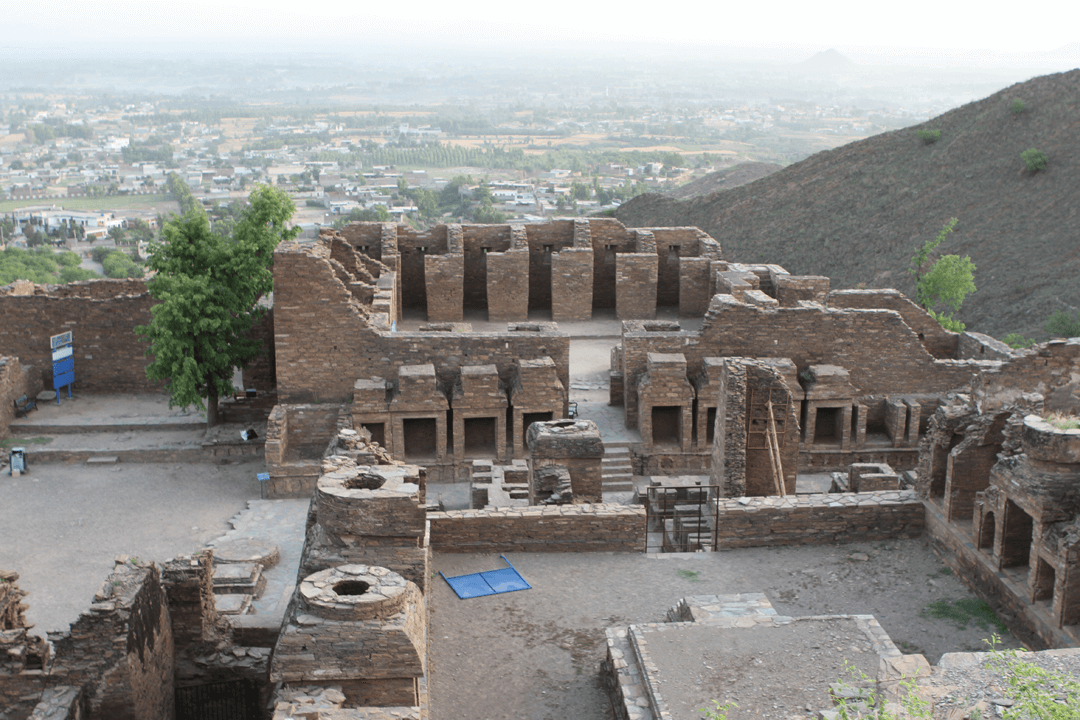
Takhti-i-Bahi was listed in the UNESCO World Heritage in 1980. The site offers a glimpse of a Buddhist monastery of great historical importance and comprises the largest Buddhist remains in the ancient kingdom of Gandhara. The diversity of archaeological layers that make up the site attests to the complex history of its construction and expansion. The structures described above, as well as many other ones- and two-story secular buildings uncovered during excavation, are stone-built in the Gandharan diaper-masonry style using local or semi-dressed stone blocks with flakes, set in lime and mud mortar. The site is a great source of historical information not only for Buddhists but also for the history of Pakistan. The archaeological evidence from the site is extraordinarily rich.
And many Gandharan sculptural ruins have been excavated, including intact statues as well as fragments in unfired clay, stucco, and terracotta. Many of the images contain small sockets for fixing and supporting the bodies and heads of clay. Stucco images recovered from the site can also be seen in various European museums.
Buddhist arts and culture emerged in this region and penetrated as religion towards the far east in China, Korea, Japan, and Indonesia. As a result of our efforts invested in the promotion of Takhti-i-bhai site through presentations, it was chosen as the first series of Asia Stupa Road Digital Heritage Project in close collaboration with the Gwangju Information and Culture Industry Promotion Agency.

Firstly, it aims to explore the diversity and cohesion of Asian culture in the region. Secondly, to introduce the forgotten World Heritage Site to the wider audiences via virtual reality and immersive content experiences in the form of a virtual museum. Our team developed a virtual reality exhibition of the 3D reconstructed Takhti-i-bhai site (Figure 2). The objective was to create an in-depth sense of immersion in the virtual Takhti-i-bhai site by easy integration of 3D scenarios with head-mounted displays. This digital experience can provide an efficient virtual reconstruction environment and an air touch experience that can increase the realization of cultural heritage site experience.
These two case examples show an active role of technology in the service of cultural heritage sites. it is concluded from our practice that 3D technologies can facilitate an interactive amusement of artworks, evidence, monuments, museums, places, and landscapes. However, the trend of virtual museums is still in its early stages and a little promoted. Nevertheless, the ultimate goal should be to encourage as much as possible the 3D reconstruction of various interesting historical sites to safeguard them and to make them enjoyable by the wider audiences. In short, there is still a need to research the new 3D technologies with great ambition and competences to determine they are useful and crucial to inform and make pleasurable the history of our cultural heritage sites.
Reference
-
J. Park, T. Muhammad and A. Jae-hong, "The 3D reconstruction and visualization of Seokguram Grotto World Heritage Site," 2014 International Conference on Virtual Systems & Multimedia (VSMM), Hong Kong, 2014, pp. 180-183, doi: 10.1109/VSMM.2014.7136646.
-
P. Jinho, T. Muhammad, J. Kim and J. Lee, "A virtual reality platform for the 3D representation of Seokguram Temple," 2015 Digital Heritage, Granada, 2015, pp. 409-410, doi: 10.1109/DigitalHeritage.2015.7413917.
-
Takhti-i-bhai Gwangju Exhibition https://m.blog.naver.com/twinkaka/221697653408Takhti-i-bhai Gwangju Exhibition http://www.vrn.co.kr/news/articleView.html?idxno=11050&fbclid=IwAR27pwnwX21hBYDnORUdOX_8bMQXln62kmGRBIIOeOod0qFn8k6D3GwUCxY

Tufail Muhammad (Pakistan)
He is a Ph.D. Candidate at Graduate School of Creative Design Engineering, Ulsan National Institute of Science & Technology, Ulsan, South Korea. He participated cultural heritage training (2011) at KAIST


