[CPI Cultural Trend] Series #3Exploring Opportunities, Challenges, and Insights in Cultural Heritage Industry
CPI Cultural Trend is the article from CPI participants who were selected as the 2020 CPI Reporter. They deliver main issues and trends of Arts & Culture industry in their country of their field four times a year. In this volume, a basic overview of their field and a work they do have been published.
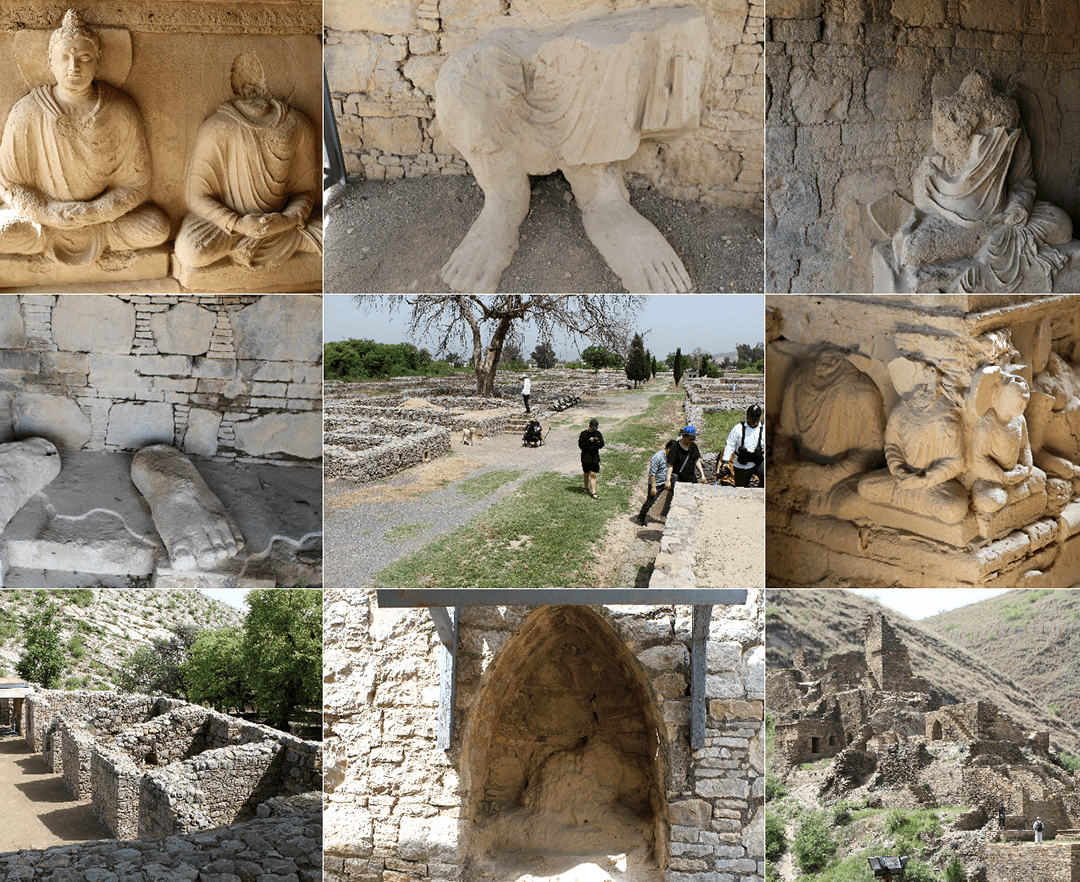
Human-induced threats serve as potential threats to the cultural heritage industry. Neglect, illegal trade of cultural property, burglary, ethnic and religious conflicts, pollution, disappearances, fires, abuse of cultural assets in tourism, and ignorance, all serve as threats to a wide range of cultural products, such as archaeological and historical places, cultural landscapes, material culture, cultural artifacts and antiques, and natural heritage. Most of these products are located in rural areas where the rural community, in general, is a deprived class. As such, the amount of collective understanding along with participation in sustainable development for the cultural heritage industry is limited. Rural development projects based on Information and Communication Technology (ICT) are applied in rural areas to foster rural livelihood, but success is still limited due to the absence of rural communities in sustainable policies and sharing in the economic gains of tourism. There is a need for reforms in policy and governance to encourage ICT-enabled development to support sustainable infrastructure and brings economic gains. These reforms can also provide new business ventures by identifying critical online marketing elements driven by rural residents. This article addresses the impact of the cultural heritage industry on rural residents, its support policy for preservation and increasing the significance value of cultural heritage, and its future possible improvements for better economic outcomes in rural areas of Pakistan.
Introduction
In Pakistan, the art and culture industry emphasizes a critical role in economic growth as well as provide a route for employment opportunities in rural areas1). Besides, the contemporary art sector is rich in diverse cultural, artistic, historical, and natural heritage. This sector affirms cultural identity, anticipating a comprehensive global image of a vivacious side of Pakistan. However, the amount of collective understanding of the global and potential domestic impact of the art and culture industry is still limited2). This industry has a lack of exposure in current policies of education, skills, business, supply chains, commercial enterprises, and finance sectors3). The cultural heritage sector is the sub-branch of the art and culture industry that includes archaeological and historical places, cultural landscapes, and natural heritage. These historical treasures are major emerging drivers for economic growth in rural areas of Pakistan. However, they are undergoing endangered from human-induced threats. According to the UNECAP (2008) report, negligence, illegal trade of cultural property, burglary, ethnic and religious conflicts, pollution, disappearances, fires, abuse of cultural assets in tourism, and ignorance, all serve as potential threats to the sustainability and preservation of cultural heritage4). Some of the human-induced threats faced by cultural sites in Pakistan are presented in Figure 1 as an example.
ICT-enabled development has been applied as an alternative in rural development projects to promote sustainable rural livelihood by alleviating poverty through entrepreneurial activities and market access, rural empowerment, and participation in sustainable cultural heritage tourism5). To date, rural areas have faced considerable environmental issues related to the loss of natural habitats and biodiversity and threats to cultural heritage treasures. Thus, the use of ICT has been promoted to handle these issues by focusing on environmentally sustainable models of economic development and emerging eco-friendly technologies for a sustainable life. However, most ICT projects face implementation challenges, and, ultimately, the use of ICTs results in projects that are not sustainable for rural and developing areas6).
This article sheds light on how ICT-based community-driven development can be formed and utilized in rural areas by identifying new business ventures for deprived rural communities. Based on this notion, this article presents the impact of the cultural heritage industry on rural residents, its support policy for preservation and significance, and its future possible improvements for better economic outcomes in rural areas of Pakistan.
The impact of the cultural heritage industry on rural community
Heritage tourism is one of the valuable products of the art and culture industry. Sustainable tourism has been utilized in many sustainable development projects in rural areas7) as an economic activity that ensures careful management of the use of inherited environmental and cultural heritage assets for preservation and tourism development2). Because of the geographic growth and the labor-intensive nature of the tourism industry, a rise in economic growth and a decline in poverty in rural areas are warranted. Nonetheless, the portion of international tourists is less significant in scale for heritage attractions in rural areas. In many cases, rural residents are poor farmers, landless workers, low-level traders, and rural artificers who are socially and economically deprived. As such, lack of participation and involvement in decision-making, partaking in economic gains, awareness, financing, skills development, and management to adjust the growth of heritage tourism turn into obstacles for sustainable development processes.
The implementation of ICT-enabled development projects in rural areas is divided into two main approaches. In the first place, the top-down professional development approach pushes for rural residents to take part via outside development5). Government organizations, NGOs, and other social institutes offer financial assistance, governance services, and technical support to empower rural communities, finance micro-level private enterprises, and form new corporate schemes. Despite such enormous funds and resources, and substantial trust of external bodies embroiled in sustainable rural development projects, success has been limited. This is due to inadequacy, instability, or improper usage of financial resources; ingenuousness of external actors; and the absence of local actors who can utilize local communities’ skills for sustainable development8). In the second place, community-driven development is carried out through which rural residents lead their development with full authorization and access to coping with cultural and environmental assets devoid of the impression of being pushed into participation by external forces. This approach is more practical in terms of community involvement since the top-down professional development approach, by not distributing economic gains, wholly disregards the willingness of rural residents in the tourism management and development processes9). The latter approach requires the capability to generate new business ventures and business openings that produce net profits for the needy residents, containing economic, sociocultural, and sustainable environmental aids rather than just expanding profits for big businesses owned by third parties.
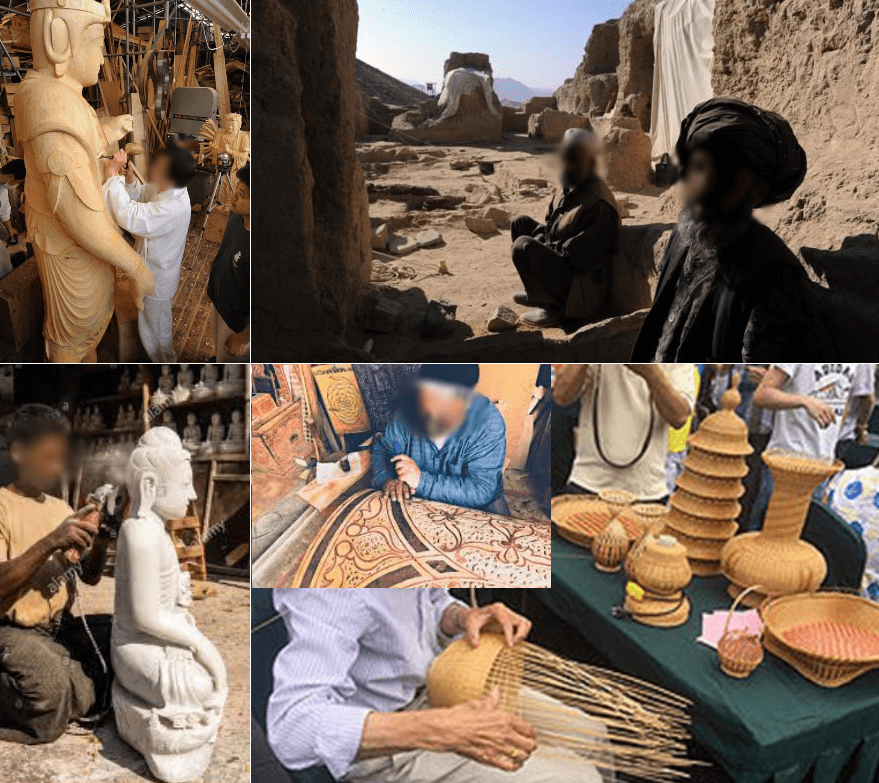
People residing in rural areas have great potentials in different areas of daily life, such as farming, crafting, and making a variety of daily use products from natural and green resources. Some residents are artificers and artisans who can reproduce antiques, such as cultural artifacts, paintings, costumes, and souvenirs that are significant and authentic cultural heritage assets (See Figure 2 as an example). To date, there are very few rural development projects based on ICT-enabled development driven by these rural residents. There are almost none of these to highlight the rural residents' skills in antique and material culture reproduction.
The major support policy to invigorate the cultural heritage industry
Generally, rural areas in Pakistan are more affluent in cultural heritage attractions and natural landscapes, which are driving forces for economic development in terms of the tourism industry and the art and culture markets. However, the limited participation of the rural community and ignorance in heritage preservation along with their deprived economic conditions are the main barriers to the sustainable development process of the cultural heritage industry. Thus, the needs of the rural community should be elicited to consider basic social and economic activities that take place in rural areas. Besides, the notions of sustainable outcomes should be strategized whether ICT approaches support activities that benefit the rural community. The focus should be mainly on community-driven development to create new business ventures that generate net profits and empower the rural community through active participation in development and economic gains.
The existing ICT based emerging marketing models can be used to highlight the skills of rural residents in antique reproduction for new business ventures. It is widely known that rural residents are potential artificers and artisans, so it suits them to bring forward their valuable skills through new emerging markets based on ICT development. These marketing models can provide a basis to underline the local skills and to reveal different roles to the rural residents, identifying internal actors in the community who can help create social and economic changes in such areas. These activities will provide a platform that gives rise to rural residents who produce, supply, or distribute products that can be sold via ICT-enabled markets.
Policymakers should underline the need to determine procedures to empower artisans and craftsmen to use ICT to bring their work to a wider audience because ICT-enabled infrastructure is still in nascent stages in rural areas and internet and communication technologies are still not widely available for a large section of residents. This problem needs to be addressed to support rural areas and allow them to restore sustainable livelihoods, especially in the post-COVID world. Such developments may also enable potential artisans to push the boundaries of their work and discover their skills in new digital ways.
Improvements in the cultural heritage industry
Community-based sustainable development for the cultural heritage industry has progressed over the past few years with expanded outreach and involvement that have made it more comprehensive and multiplying its economic gains for rural areas. The perseveration measures and restoration projects for historic settlements and arrangements around heritage sites and cultural objects have elicited a process of community transformation, empowering rural residents to have improved access to ICT services. Besides, the preservation of material culture and cultural goods has increased awareness of the current ecosystem, stimulating an upsurge in local sourcing of numerous materials and retaining cultural significance on the sustainable environment as vibrant features of the areas of cultural heritage development.
The aga Khan Trust for Culture (AKTC) has recently worked on the expansion of socio-economic terms in rural areas and leveraged the transformative power of cultural heritage assets, which has been acknowledged by UNESCO with prestigious prizes10). AKTC has conducted the restoration and adaptive reprocess of historical-cultural heritage sites and involved rural communities by mobilizing them for sustainable development. The AKTC cultural heritage projects have led to increased local revenue opportunities, skill development, and the promotion of material culture, and the formation of new ICT-based institutions with the desire to improve the quality of life.
Conclusions
ICT-enabled development in rural areas can ultimately warrant community-driven development. This will make it accessible for rural residents to participate in sustainable development by constantly adapting to ICT-based business ventures in serving cultural heritage and the art and culture industry. ICT-enabled emerging marketing models for handicraft and material culture could also open the participation of rural residents by diversifying work opportunities in their current context. This is, however, the role of the governing bodies to focus on how ICT-based community-driven development is utilized in rural areas by identifying new business ventures for deprived rural residents. Through social projects, they should identify key actors that commence, take the lead, and shape the strategy of self-organizing ICT-enabled markets for their local trades. These actors may include internal actors in rural areas who recognize and promote craftsmen and local artificers, e-tailers, and e-supply chain partners. These services may also require proper resources, financial assistance, and shareholder commitment, thus institutional partners and guarantors should also be identified. Policymakers in government should focus on emerging marketing models based on ICT to support new business ventures by identifying critical online marketing elements that could be driven by rural residents for a better future.
Reference
-
[1] Evans, K., Stockley, S., Taylor, C., Brown, J., Rab, M., & Khan, S. (2014). Mapping cultural and creative industries in Pakistan.
-
[2] Muhammad, T., & Myung Kim, K. (2018). Sustainable and ICT-Enabled Development in Developing Areas: An E-Heritage E-Commerce Service for Handicraft Marketing. In Journal of Physics: Conf (pp. 1-8).
-
[3] Yang, Y., Shafi, M., Song, X., & Yang, R. (2018). Preservation of cultural heritage embodied in traditional crafts in the developing countries. A case study of Pakistani handicraft industry. Sustainability, 10(5), 1336.
-
[4] UNECAP 2008 Cultural Tourism Sites Management – A Training Manual for Trainers in the Greater Mekong Sub region, United Nations, Economic and Social Commission for Asia and the Pacific. Available on http://lib.dtc.ac.th. Retrieved on 20/09/2020.
-
[5] Pade, C. I., Mallinson, B., & Sewry, D. (2006, October). An exploration of the categories associated with ICT project sustainability in rural areas of developing countries: A case study of the Dwesa project. In Proceedings of the 2006 annual research conference of the South African institute of computer scientists and information technologists on IT research in developing countries (pp. 100-106).
-
[6] Savitha V and Rajashekar H 2014 Evaluation of Major Problems Faced by the Members of Self Help Groups: A Study of Mysore District IMPACT: International Journal of Research in Applied 2 59–64.
-
[7] Arthur, S. N. A., & Mensah, J. V. (2006). Urban management and heritage tourism for sustainable development. Management of Environmental Quality: An International Journal.
-
[8] Leong C M L, Pan S L, Ractham P and Kaewkitipong L 2015 ICT-Enabled Community Empowerment in Crisis Response: Social Media in Thailand Flooding 2011. Journal of the Association for Information Systems 16 1–39
-
[9] Mansuri G and Rao V 2004 Community-based and -driven development: A critical review World Bank Research Observer 19 1–39. The aga Khan Trust for Culture. Available on https://www.akdn.org/. Retrieved on November 20, 2020.
-
[10] The aga Khan Trust for Culture. Available on https://www.akdn.org/. Retrieved on November 20, 2020.

Tufail Muhammad (Pakistan)
He is a postdoctoral researcher at the Department of Design, Ulsan National Institute of Science & Technology (UNIST), South Korea. He participated cultural heritage training (2011) at KAIST


