Introducing Issues Surrounding Public Education
in the Philippines and Future Development

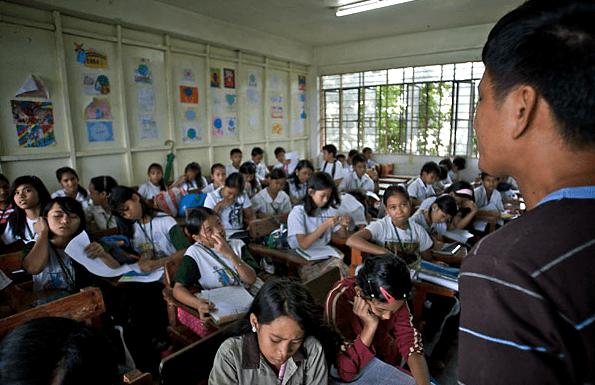
Even before the start of the Covid-19 pandemic, the state of the Philippine education system was in dire need of a systemic overhaul, with issues such as crowded classrooms and teacher shortages stemming from the lack of government funding into the education system. Now that these crowded and short staffed schools have moved online, students are experiencing a decrease in the quality of education they receive due to a lack of adequate Information and Communications Technology (ICT) infrastructure.
“The Lack of Information and Communications Technology Infrastructure”
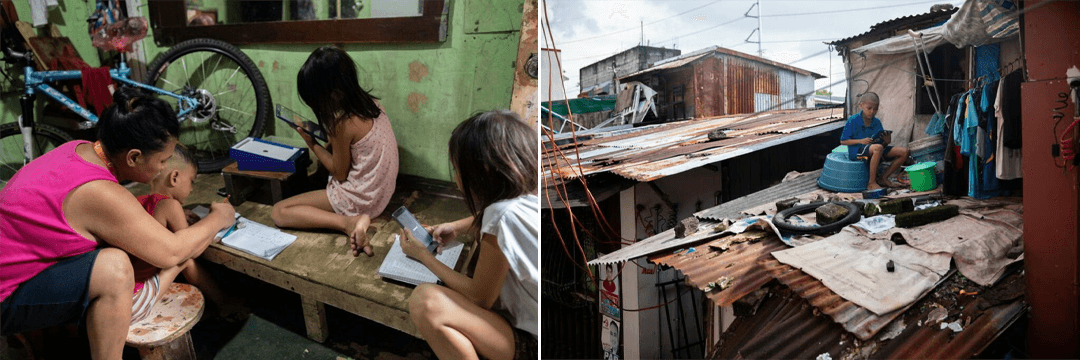
The pandemic not only increased the burden on teachers, but also emphasized the poor state of ICT infrastructure in the Philippines. As of September 2021, more than a year into the COVID-19 pandemic, more than 47% of public school students who live in rural areas did not have access to the internet due to a combination of instable connections and soaring prices. Now that an internet connection has become a necessary part of our lives, many Philippine families are finding it difficult to educate their children without it. This combination of a poor learning environment due to the lack of teachers and the inability to access education has resulted in a sharp decrease in school enrollments. In fact, more than 3 million students have dropped out of school since the pandemic, and still to this day remain unenrolled in school.
The Philippines needs to focus on improving access to education by increasing accessibility to the internet. The number of teachers, the number of students, and the quality of the education provided are meaningless if the student cannot secure access to education. In order to ensure that the remaining students who are still enrolled in school can access their education, we need to improve internet infrastructure.
Globe and PLDT Duopoly
Currently, the Philippines only has two main internet service providers as a result of the lack of competition in the industry. With the way the law is written, it is difficult for new companies to become internet service providers due to the mass amount of capital needed to fulfill the requirements as stated. According to Republic Act 7925, if a startup wanted to become an internet service provider, they would need to establish 400,000 telephone lines within 3 years, otherwise, their authority faces being terminated. Therefore, this acts as a barrier for new companies to enter the market due to the amount of money needed to set up the large amount of telephone lines.

In order to drive competition in this sector, the Philippine government needs to revise laws regarding this issue and make it easier for businesses to compete. An increase in businesses present in this industry would not only increase competition and drive down consumer prices, but also accelerate the construction of cell towers in the Philippines and make internet more accessible.
Slow ICT Development
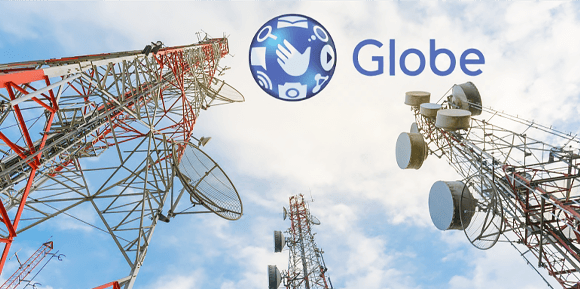
Currently, the Philippines has 18,000 cell towers, and in order to catch up with other countries, they need to build 50,000 more cell towers. A cell tower is a tall structure that connects the cell providers’ subscribers to wireless internet, and therefore allows for faster internet speeds due to a decrease in network congestion per tower. Since most of the 8 months in trying to build a single cell cite are spent trying to secure the mass amount of government permits required, the Department of Information and Communications Technology (DICT) is trying to shorten this period to just 9 days by decreasing the number of permits needed.
Additionally, the DICT released a strategy to improve connectivity in the Philippines through the CHIP (Connect, Harness, Innovate, and Protect) framework. Although the framework requires that the Philippines builds 5,000 cell towers a year for the next 3 years, this is not enough to reach the 50,000 cell tower requirement needed for the Philippines to catch up to neighboring countries. By increasing competition in the ICT sector and easing regulations on the development of cell sites, the Philippines can increase internet accessibility and make it easier for students to receive an education.
Future outlook
The future of public education is here now and it is online. Now that the new normal has introduced a new form of education to be taught remotely, more children should have access to education as long as they have access to the internet. The Philippines can increase access to the internet by easing regulations required to become an internet service provider and by developing more cell towers, therefore improving ICT infrastructure. Increasing accessibility to learning in the public education system is one of the many things we can do to create a sustainable education system and also the economy.
ㆍEducation Issues in the Philippines: The Ongoing Struggle. (2021, August 25).
https://childhope.org.ph/education-issues-in-the-philippines/
ㆍBlended: Learning in the time of COVID-19. (2021, September 10). Philstar.com.
https://www.philstar.com/other-sections/education-and-home/2021/09/10/2124641/blended-learning-time-covid-19.
ㆍKemp, S. (2021, February 11). Digital in the philippines: All the statistics you need in 2021. DataReportal – Global Digital Insights.
https://datareportal.com/reports/digital-2021-philippines
ㆍCheapest internet in the world: 2021 country ranking. (2020, December 15). Atlas & Boots.
https://www.atlasandboots.com/remote-work/countries-with-the-cheapest-internet-world/
ㆍPhilippine digital strategy | dict. (2014, June 18). Department of Information and Communications Technology.
https://dict.gov.ph/philippine-digital-strategy/
ㆍCamus, M. R. (2020, July 30). Takeover of telcos possible, but costly for virus-hit PH. INQUIRER.Net.
https://business.inquirer.net/303993/dutertes-telco-takeover-threat-compounds-red-tape-woes-200-days-to-get-permits
ㆍAtienza, K. A. (2021, February 23). DICT adopts cell tower-building goal of 5,000 a year for 3 years. BusinessWorld Online.
https://www.bworldonline.com/dict-adopts-cell-tower-building-goal-of-5000-a-year-for-3-years/
ㆍNatividad, N. (2021, February 22). Why internet speeds in the Philippines are so slow. Vice.
https://www.vice.com/en/article/n7vy3m/why-internet-speeds-philippines-slow-laws

Raiza Dalofin
Raiza Dalofin is currently an intern at the Korean Foundation for International Cultural Exchange (KOFICE). She is currently a senior at the University of Hawaii at Mānoa majoring in Korean and Political Science. She is in Korea as an exchange student at Korea University through the Korean Flagship Capstone Program


