Can the convergence of technology and cultural resources promote
experiences of other cultures in positive ways?

As evident by such convergence-related words as “fusion”, “collaboration”, and “crossover”, distinction between genres has long been rendered meaningless, and collaboration across genres is no longer a mere trend but an integral part of arts and culture.
Alongside the global popularity of the Korean Wave, there’s been a sharp increase in the number of collaborative cases led by up-and-coming traditional artists with maestro spirits cultivated through long-term training, and many creators based on traditional culture are on the rise.
In addition, traditional creators venturing into the online realm expand their practices beyond the mono-generic limitations of gugak (Korean traditional music), Korean cuisine, hanbok (traditional Korean clothes), traditional liquor, and traditional crafts to graft cutting-edge technologies such as metaverse, NFT, and augmented reality onto traditional content. This allows the general public to gain vivid and unique experiences across the past and the future.
As the impact of the future (virtual reality) on everyday life increases due to the pandemic, the instinctive longing for the familiar past amidst the rapidly changing environment is fully reflected in traditional culture.
Memories and nostalgia about old things have been reconstructed into such sentimental keywords as “retro” and “newtro”, raising curiosity and demand for traditional Korean arts and culture. This in turn continues to expand the market and leads to innovative reproduction of content.
This is very similar to the trend of retrofuturism—a portmanteau of the Latin word “retro” meaning “backward” and the English word “futurism.” It refers to the creative and artistic tendency representing the influence of futurism that prevailed in the 1950s~60s in the wake of space exploration.
Inspired by retrofuturism, I would like to introduce two cases of content development by Meta Traditional, which maximizes the convergence of technology and traditional culture in the midst of a pandemic crisis.
1. Hanbok in AR: ARTIVIVE (Circus Company, Artivive, 2020 & 2021)
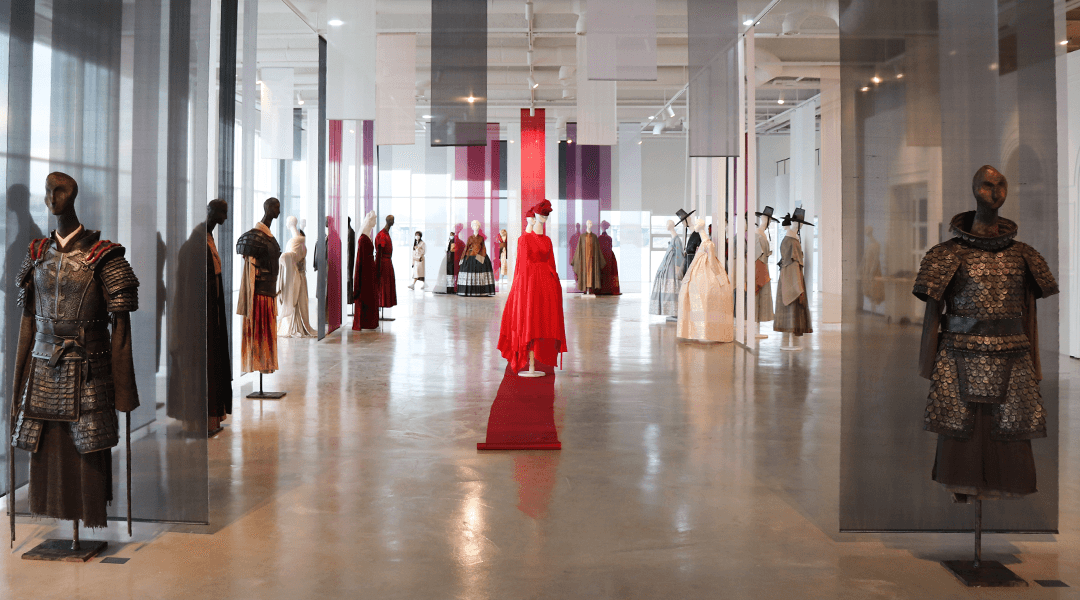
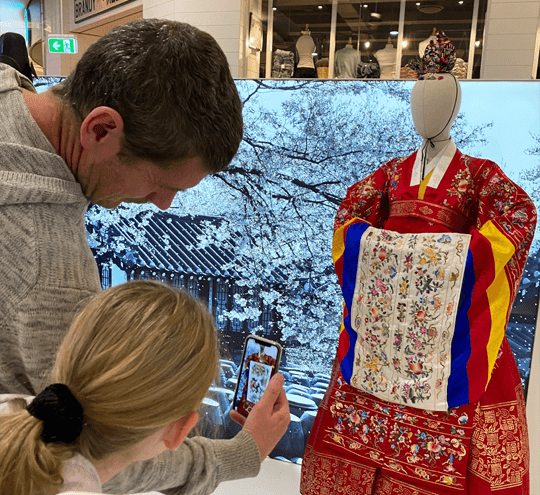
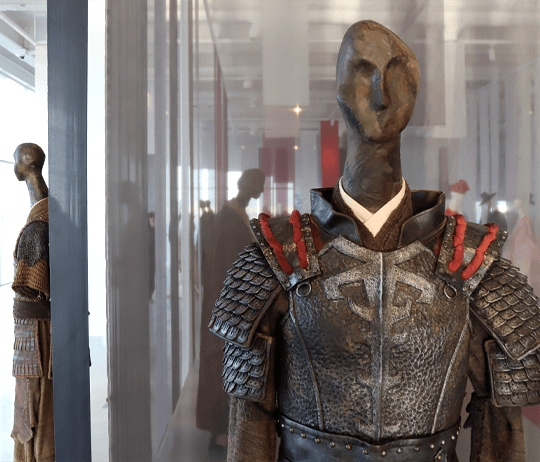
In 2020, for the first time in Korea, an innovative hanbok exhibition was organized using AI and AR technologies to allow people to experience hanbok rather than just wear it. Visitors could use markers to detect patterns and embroidery on hanbok, and them tag them with a special AR application to conjure up three-dimensional scenes or images of actors wearing the same hanbok on their smartphones or tablet devices.
In addition to displaying hanbok worn by Korean celebrities in a number of popular period films and TV series-including The Treacherous, Sungkyunkwan Scandal, Love in the Moonlight, Mr. Sunshine, and Lovers in the Red Sky-the convergence program evoked memories and interacted with the audience through AR technology.
Available for use online and offline, this application focused on the possibility of growing into representative Korean wave content by adding to the theme of hanbok codes of empathy and diffusion, which are at the core of the Korean wave.
2. Interactive Talchum with Hundreds of Facial Expressions :
Pandemic, Narye (Executive director Cho In Sun, 2021)
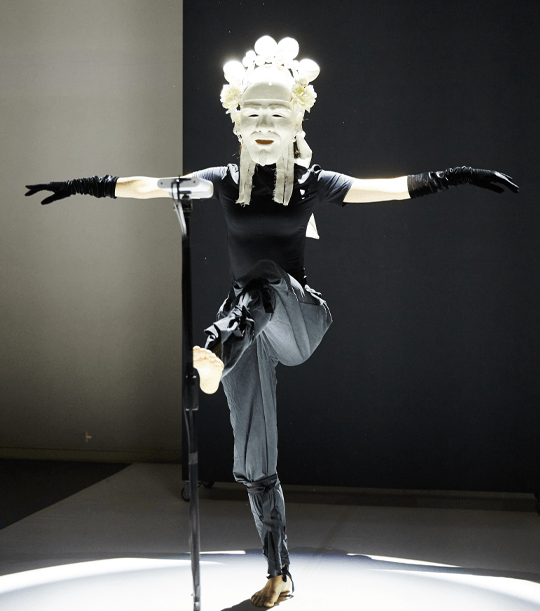
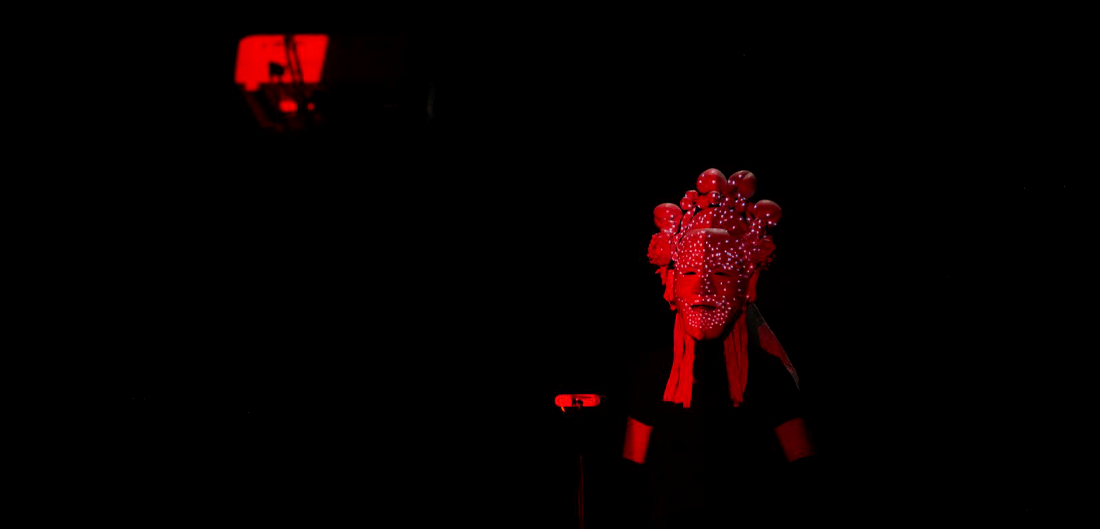
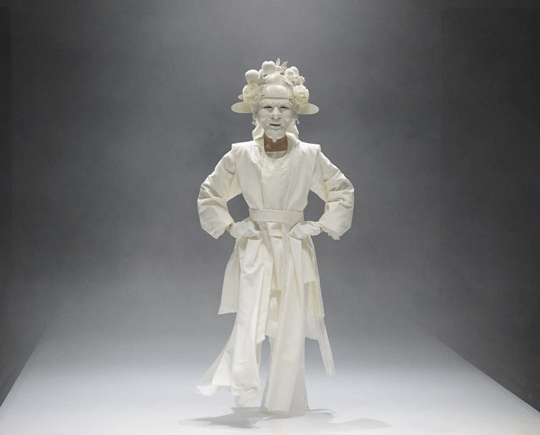
This work technologically embodied various psychological effects suffered during the socially destabilizing coronavirus pandemic as vivid facial expressions of joy, anger, sorrow, and pleasure on the Cheoyong mask-one of Korea’s representatives masks.
The interactive media performance took as its object the Cheoyong mask-which dispelled a pandemic according to legend-and used the face-tracking technology to change facial expressions in real time.
The key technology ensured natural formation of images on the mask with continuity and minimal time lags despite the dancers’ dynamic movement by recognizing various pre-designed patterns and expressions of the Cheoyong mask based on big data.
The task of creating three-dimensional images of the mask called for a technology that could be used to recognize outlines and depth accurately, reflect the extracted data in real time, and then project images on the moving mask in real time.
Since such a technology had not yet been introduced in Korea, the creatives went through a long period of trial and error. In the end, by researching and developing the technology of high-speed data processing and adjusting expansive pre-acquired expression data from various angles, the interactive performance Pandemic, Narye was successfully presented in November, 2021.

Cho In Sun
Majored in the Korean traditional instrument the Ajaeng, Cho In Sun is in charge of Korea's first traditional art platform called Modern Han (Modern Korea). Modern Han introduces the excellence of Korean art to global market by reinterpreting Korean Traditional art through Korea's first AR Hanbok Exhibit and a fusion performance using face tracking technology.


