Advancing Public Service Performance
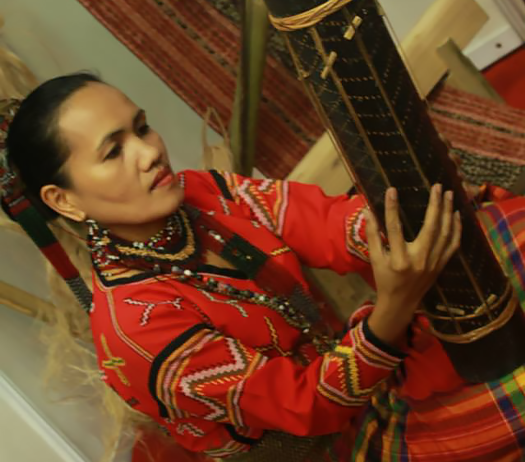
One of the most distinct tribal communities that I have been engaging myself with is the Tokalons–a Blaan tribal community found in City of Koronadal, Regional City Center of SOX Region. For generations, the Tokalon weavers have perfected the art of making Tabih and Ansif in complicated intricate patterns and vibrant colors. According to one member, traditionally, their weavers produce luxury fabrics for religious ceremonies, weddings and for chiefs or datus to wear. However, Delia, one of the gifted weavers of this traditional fabric, finds it hard to keep her art and her culture alive. Imported cloths and clothing and the “urbanization” of many rural areas in the region are grinding away at the traditional cultural aspects of their lives. Is this then a manifestation that some of the Tokalon’s traditional practices are dying? If it indeed is, how can we preserve culture so that it won’t die in the course? Can we stop the vast influence of “urbanization” with our robust efforts in preserving culture, traditions, and beliefs of such tribal communities? Or the better question perhaps would be, “Can we genuinely preserve culture?”
In this era of social distancing and the undoubtably-pressing needs for heavy investments in the future–in particular, to remedy devastated economies due to the pandemic–how can we ensure that the concepts, experiences, and teachings of the past continue to be incorporated? If our understanding on the importance of culture remains the same–as sources of inspiration, resilience, courage, and artistic innovation during this pandemic, how can cultural preservation be possible?
My short stay in Seoul, South Korea confirms that Confucianism continues to pervade the consciousness of many Koreans including its business culture. I still can feel how Koreans value the sense of filial obligation towards others especially to their elders and to their respective families. Simply put, Confucianism remains an important aspect in the Korean society where ideals such as loyalty, benevolence, and trust are still part of the nation’s cultural fabric. Does this confirm then that South Korea’s efforts towards cultural preservation have triumphed despite its rapidly changing environment?
In the Philippines, we have started escalating our footsteps in realizing our collective long-term vision and aspirations for our people and for the country through Ambisyon Natin 2040. It describes the kind of life that Filipino want to lead and is a vision for the country’s future by 2040.It composes of a body of life goals that defines a constellation of strategies that we needed to undertake for all Filipino families to live together with appropriate work-life balance, where poverty is eradicated and where every Filipino can expect to live long and enjoy a comfortable life upon retirement. In achieving all dimensions of development, Ambisyon Natin 2040 emphasizes the relevance of “Promoting Culture and Values” as utterly important key ingredient towards creating development opportunities for economic, human and physical capital, institutional, social and cultural aspects.
Today, many local knowledge systems are at risk of becoming extinct as global natural environments are rapidly changing with fast-paced economic, political, and cultural changes. Practices vanish when they are deemed inappropriate in the face of new challenges, or when they adapt too slowly.
If this is the case, is it still necessary to exert immense efforts to continue to preserve or conserve our culture, traditions, and beliefs?
Section 16 of the Local Government Code of 1991 states that local government units play an important role in the development and preservation of Filipino identity. This code is about raising the level of awareness and consciousness of our constituents on the salience of promoting the Filipino culture in instilling nationhood and cultural unity. However, to a certain extent, we also experienced a situation where we also failed to cope with the enormous impact of culture on our local economy and development.
Let me share with you how we started cultural endeavors in the City of Koronadal. The first major challenge that I was very much excited to undertake during my first few months in the LGU was on how to make our culture and the arts development agenda more creative and vibrant and become renowned for its excellence and innovation nationally.
It was an ambitious attempt that required revival of our historical council and solicitation of partnership with agencies that have agree with our vision. We conducted series of festival management dialogues, trainings, and workshops to start with. Focusing on creativity, vibrancy, excellence, and innovation can never be achieved overnight, and we had a substantial amount of planning and consultation dialogues in formulating programs and recommendations to develop local cultural and artistic talents.
Of course, the Local Government Unit has to ensure the protection, preservation, and conservation of the local cultural and historical heritage. One of our development strategies, which we believe can help us execute this objective, is through the establishment of a School of Living Traditions for the Tokalons.
In solid coordination with our private partners and other national line agencies, we will conduct regular annual cultural events, competition, lectures, fora and symposia and set up exhibits during special and national events and other related activities. This is to ensure that everyone in our locality can enjoy the benefits that come from experiencing and participating in arts and culture. Are these enough?
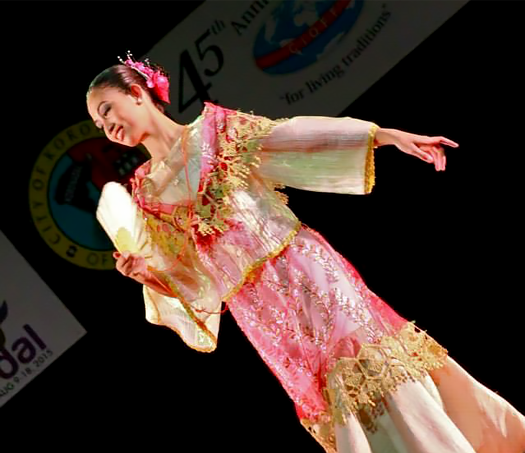
In 2015, we thought of building stronger our expertise and creativity internationally active. We thought of putting more efforts in increasing our resilience through the exploration of a much higher ambition of ensuring high quality arts, experiences in cultural activities vis-a-vis the noble intention of safeguarding, promoting and diffusion of intangible cultural heritage of the various tribes in our locality, mainly through genres of expressions such as music, dance, games, rituals, customs, know-how of handicraft, and other arts. This is precisely when the renaissance of the 1st International Folklore Festival in the country – dubbed as Pyesta Kolon Datal happened.
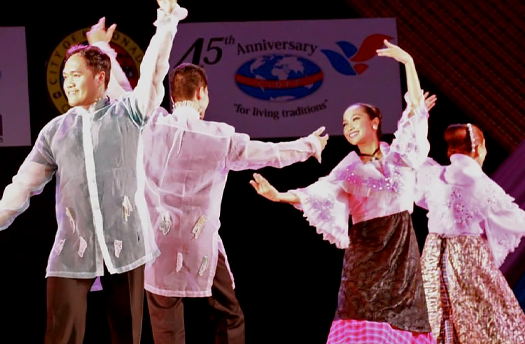
Hosting CIOFF 2015 International Festival, the City of Koronadal had also escalated our understanding of the importance of culture in the course of attaining sustainable development. More than anything else, we have realized that hosting this first-ever international event requires bigger responsibilities. These responsibilities are fused into the task of the City of Koronadal as a representative of the peace and friendship that Mindanao offers and what its people continue to work for. CIOFF 2015 in City of Koronadal was a testament that showcased not only the culture and arts from all over the world but the peace, security, and opportunities in the region and the islands. Not only have our locales been educated while being entertained with the different cultural heritages, but the wide expanse and coverage that a CIOFF International Festival promotion had brought tells the world that the Philippines is definitely a place to visit.
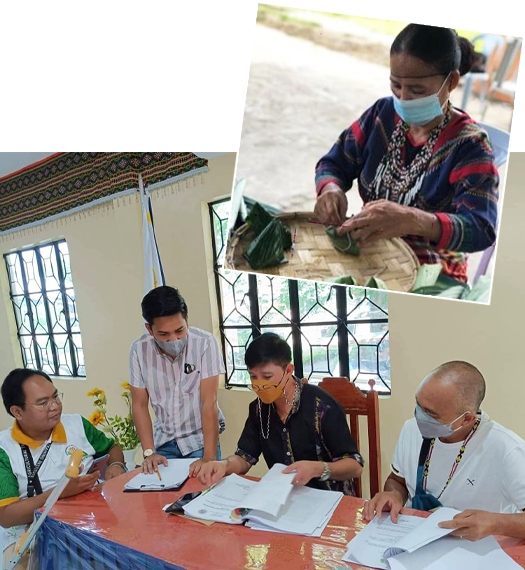
Again, the question remains, “Is the Local Government Unit taking the right course for cultural preservation?” Or, given the rapidly changing environment, is cultural preservation possible? If it is not, what will be the point of “cultural preservation” when we can’t even keep it? Why bother ourselves with the tangible and intangible cultural heritages when our topmost priority is to look for something that I can feed my families with? Why bother ourselves to gather and talk about buildings, monuments, landscapes, books, works of art, artifacts, and more? Why should we spend time studying about living expressions inherited from our ancestors and how these are passed down generations through oral traditions, performing arts, social practices, rituals, festive events, knowledge and practices concerning nature and the universe ,or the knowledge and skills to produce traditional crafts and many others?
The fact is that culture is evolving because we are social beings. We communicate and engage ourselves with other people. If there is a way to preserve the culture, the community should document it. Cultural preservation includes documenting and studying languages; preserving and restoring historic relics significant to a culture or heritage; and encouraging the preservation and use of indigenous or tribal languages and rituals.
My CPI training in 2022 on advancing my understanding and appreciation of Cultural Management has provided me with a constellation of notable experiences that genuinely confirms how culture can play a number of significant roles in the promotion of peace. I am optimistic that despite a ton of headaches brought by this global health crisis, the City Government of Koronadal can help promote cultural activities in such a way as it will give our local people ownership of the endeavors. These are the activities that can provide a common space for our people to meet, communicate, and interact. More importantly, this opportunity to engage with the hard-working CPI people has taught us further the importance of communication which includes both listening and expressing oneself... and culture often can be a medium that helps build confidence to that end. However, the struggle is ongoing. The Philippines in general still has a thousand miles to trod on. The better news is that, however, we’ve been taking some significant steps already with the guidelines formulated under Ambisyon Natin 2040. I can feel that we have already started what we are supposed to do, meaningfully, and we have started to inspire more individuals and institutions to do the same.
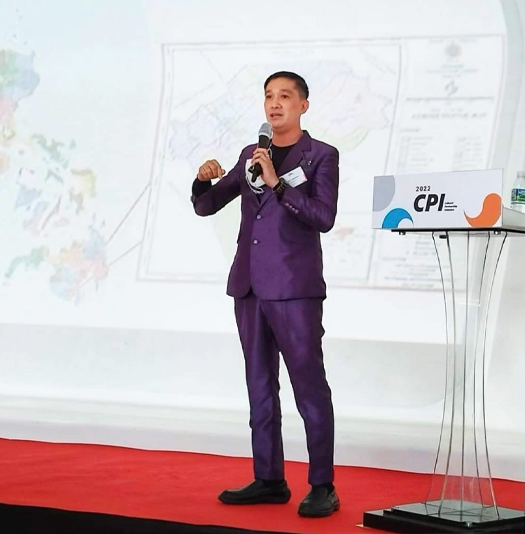

ELRIC MATILLANO BATILARAN, MPA
2022 CPI Cultural Administrator Training Program Participant
City Government Department Head I/Tourism Officer, Local Government Unity-City of Koronadal, Philippines


